MIMER — Mitigating Presentation Attacks in Remote Identity Proofing
Pakistan in Focus: Securing Digital Identity Through AI
The Challenge
The shift towards digital channels for financial transactions due to the COVID-19 pandemic has led to an increase in fraudulent financial transactions in low-middle-income countries like Pakistan due to weak remote identity proofing (RIDP) processes. According to Pakistan's Federal Investigation Authority, 25% of crimes reported in 2021 were electronic financial fraud, with identity spoofing scams topping the list.
The existing methods of verifying a person's identity through electronic means, such as facial recognition, can be easily deceived by advancements in artificial intelligence — particularly deepfakes. A 2022 study revealed that nine out of ten liveness tests employed by banks are highly susceptible to deepfake attacks. These sophisticated forgeries are much more successful in bypassing verification processes than traditional methods.
The lack of trust among users in Pakistan — where cash is still widely used — in adopting mobile technologies for banking services hinders the government's efforts to increase financial and digital inclusion for 100 million underbanked individuals. This undermines Pakistan's National Financial Inclusion Strategy (NFIS) to reduce poverty (UN SDG 1) and foster inclusive economic growth (UN SDG 8).
The Solution: MIMER Project
MIMER develops a robust authentication method to protect remote identity verification systems from emerging identity spoofing attacks through:
- Bimodal Authentication — Combining audio and visual biometrics for robust verification resistant to single-mode attacks
- Multilingual Corpus Development — First Urdu-language anti-spoofing dataset tailored to Pakistan's linguistic context
- Advanced Detection Models — AI algorithms detecting audio-video forgeries, deepfakes, and multi-spoofing attacks
- Federated Learning — Privacy-preserving on-device processing reducing data transfer costs and environmental impact
- Real-World Validation — Partnership with fintech companies for deployment in Pakistan's banking ecosystem
Project Details
| Award Title | Mitigating presentation attacks in remote identity proofing (MIMER): Pakistan in Focus |
| Programme | EPSRC International Collaboration |
| Award Reference | EP/Y002288/1 |
| Lead Organisation | University of Glasgow |
| Principal Investigator | Dr Ahmed Zoha |
| Funding Value | £176,517 |
| Duration | 2024-2026 |
| Partner Country | Pakistan |
| Academic Partner | University of Engineering and Technology Taxila (UETT) |
| Industry Partner | Simplicity Technologies (Stech.ai) |
Research Objectives
Evaluate the feasibility of implementing advanced biometric authentication methods within the digital identity ecosystem of Pakistan, identifying potential obstacles and opportunities
Create a bi-modal corpus in the Urdu language for anti-spoofing in remote identity proofing, tailored to meet the specific needs and challenges of Pakistan's digital ecosystem
Develop reliable and robust audio-video presentation attack detection models that can handle anti-forensics and multi-spoofing attacks and perform effectively in diverse and real-world scenarios
Engage with a range of in-country stakeholders to understand the intersection between security, digital literacy, education, and legal regulations within the country
Establish sustainable partnerships, prioritise dissemination and networking with scholars, policymakers and other professionals in related fields via project partners UETT and Stech.ai
Strategic Alignment
UK Priorities
- EPSRC Strategic Theme: "Building a Secure and Resilient World"
- EPSRC Research Areas: Artificial Intelligence, Digitalisation, Data, Cyber Security
- UKRI ODA Priorities: Reducing poverty, promoting sustainable development
Pakistan National Priorities
- National Financial Inclusion Strategy (NFIS): Expanding digital financial services to 100 million underbanked individuals
- State Bank of Pakistan (SBP): Combating mobile money fraud and identity theft
- Digital Transformation: Building trust in digital banking and fintech services
UN Sustainable Development Goals
- SDG 1: No Poverty — Enabling secure financial inclusion for underbanked populations
- SDG 8: Decent Work and Economic Growth — Fostering inclusive digital economy
- SDG 16: Peace, Justice and Strong Institutions — Reducing identity theft crimes
Research Approach
The project addresses critical vulnerabilities in remote identity proofing through:
Technical Innovation
- Unified deepfake detector for both audio and visual forgeries
- Bimodal anti-spoofing framework exploiting voice-face correlation
- Federated learning strategies enabling on-device processing
- Detection models adapted to local language and environmental conditions
Real-World Impact
- Multilingual (Urdu/English) voice authentication for call centres, ATMs, and kiosks
- Enhanced accessibility for Urdu-speaking populations, particularly women
- Support for regulators in meeting international compliance standards
- Tools for combating rising digital identity-related crimes in UK and Pakistan
Academic Team - University of Glasgow

Dr Ahmed Zoha
Role: Senior Lecturer (Associate Professor), James Watt School of Engineering
Affiliation: Communication Sensing and Imaging (CSI) Research Group
Expertise: AI/ML, federated learning, multimodal signal processing, image and video analysis, distributed data processing, healthcare informatics
Academic Team - University of Engineering and Technology Taxila (UETT), Pakistan

Prof Muhammad Haroon Yousaf
Role: Professor of Computer Vision, Computer Engineering Department
Director: Swarm Robotics Lab (SRL), National Centre of Robotics and Automation (NCRA)
Expertise: Computer vision, multimodal machine learning, face-voice associations, deep learning, swarm robotics
Director of Swarm Robotics Lab (2018, 79M PKR/~£300K grant) with 15+ researchers. 1,100+ citations (h-index 17), 90+ publications. Associate Editor IEEE TCSVT. Best University Teacher Award (HEC Pakistan, 2014). Supervised 3 PhDs and 30+ MS students.
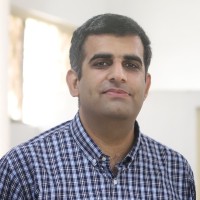
Dr Junaid Mir
Role: Assistant Professor, Electrical Engineering Department
Expertise: Video and audio signal processing, multimedia forensics, deepfake detection
PhD from University of Surrey, UK (DFID-funded). 30+ peer-reviewed publications. Research grants exceeding £30K. Expertise in video processing, audio forensics, and presentation attack detection.

Dr Ali Javed
Role: Associate Professor, Department of Software Engineering
Expertise: Audio and video spoofing detection, digital forensics, deepfake detection
100+ publications (IF 200+), 1,600+ citations (h-index 21). Supervises 5 PhDs, 50+ MS students. Led $239K NSF-funded digital audio forensics project (U. Michigan). Leads HEC Pakistan deepfake detection project (4.5M PKR).
Industry Partner
Simplicity Technologies (Stech.ai)
Company Profile
Stech.ai provides technology services to large microfinance banks in Pakistan, automating the loan application process and handling 4,500+ applications daily. Their automation covers the entire journey from user onboarding, authentication, and validation to final credit decisions.
Role in MIMER
- Advisory board member providing strategic guidance
- Network access to stakeholders in Pakistan's financial sector
- Real-world validation environment for anti-spoofing solutions
- Participation in knowledge exchange workshops
- Feedback on project outcomes and commercialisation pathways
Research Consortium
Lead Institution: University of Glasgow
- Top-ranked, research-intensive institution (ranked #1 in Scotland for research excellence)
- Long history of engineering leadership: first in UK to confer engineering degrees and establish Chair of Engineering (1840)
- James Watt School of Engineering
- Communication Sensing and Imaging (CSI) Research Group
- Home of Scotland 5G Centre
- Wide range of industrial partners and world-class facilities
Partner Institution: University of Engineering and Technology Taxila (UETT)
- Established 1993, leading Pakistani engineering university
- Ranked top 500 globally in Engineering & Technology (Times Higher Education 2023)
- Swarm Robotics Lab: 1 of 11 labs in National Centre of Robotics and Automation (NCRA)
- International collaborations: UK, South Africa, Germany
- Active in industrial robotics, computer vision, and AI projects
Stakeholder Network
UK Stakeholders
- Research Institute in Science of Cyber Security (RISCS)
- CENSIS (Innovation Centre for Sensor and Imaging Systems)
- Scottish Cyber Resilience Unit
Pakistan Stakeholders
- State Bank of Pakistan (SBP) — National banking regulator
- Pakistan Telecommunication Authority (PTA) — Telecom regulator
- National Database and Registration Authority (NADRA) — Identity management
- Federal Investigation Authority (FIA) Cyber Crime Wing
- Karandaaz Pakistan — Financial inclusion development organization
Partnership Model
University of Glasgow
- AI/ML Research Leadership
- Federated Learning Expertise
- International Quality Standards
- EPSRC Funding Management
- UK-Pakistan Research Bridge
UETT Pakistan
- Computer Vision & Audio Forensics
- Local Context Knowledge
- Urdu Language Expertise
- National Stakeholder Access
- Real-World Deployment Sites
Stech.ai
- Fintech Industry Experience
- 4,500+ Daily Transactions
- Banking Network Access
- Commercial Validation
- Market Intelligence
Joint Innovation
- Multilingual Datasets
- Bimodal Authentication
- Federated Anti-Spoofing
- Policy Recommendations
- Capacity Building
Work Packages
Activities
- Examine existing state of RIDP solutions in Pakistan
- Assess compliance with international standards (ETSI, ISO)
- Evaluate assurance levels in authentication processes
- Conduct stakeholder workshops in UK and Pakistan
- Engage regulators: SBP, PTA, NADRA (Pakistan); RISCS, CENSIS (UK)
- Identify use cases and demonstration scenarios
- Document vulnerabilities and design recommendations
Task 2.1: Multilingual Bimodal Anti-Spoofing Database
- Develop first Urdu-language anti-spoofing corpus
- Include both Urdu and English for code-switching scenarios
- Multiple device types, sessions, lighting conditions
- Gender-balanced samples tailored to local context
- Simulated presentation attack scenarios (replay, deepfake, 3D masks)
Task 2.2: Visual Anti-Spoofing Framework
- Detect multiple visual forgeries: face swapping, lip-syncing, puppet mastering
- Robust to anti-forensics attacks and adversarial perturbations
- Cross-corpus evaluation for generalizability
- Real-time performance optimization for mobile deployment
Task 2.3: Audio Spoofing Detection Framework
- Detect voice cloning and voice conversion attacks
- Handle adversarial pre/post-processing operations
- Multilingual support (Urdu, English, Hindi)
- Lightweight models for resource-constrained devices
Activities
- Develop unified bimodal anti-spoofing framework
- Exploit correlation between voice and face cues
- Achieve robustness against unknown/combined attacks
- Implement federated learning for privacy-preserving processing
- On-device feature extraction to reduce data transfer
- Server-side aggregation and inference
Activities
- Organize targeted workshops in UK and Pakistan
- Engage financial institutions, regulators, policymakers
- Publish in high-impact journals
- Present at leading security and multimedia conferences
- Train postdoctoral researchers and PhD students
- Establish long-term UK-Pakistan research networks
- Knowledge transfer events with Stech.ai
Activities
- Academic Management Group (AMG) quarterly meetings
- Progress monitoring and financial oversight
- Adherence to EPSRC AREA framework
- Ethical approval procedures for dataset access
- Open science: datasets and code repositories
- Risk management and quality assurance
Key Innovations
First Urdu-Language Anti-Spoofing Dataset
The Multilingual Spoofed Speech (MSS) dataset is the first comprehensive anti-spoofing corpus featuring Urdu as the primary language, with code-switching between Urdu, Hindi, and English. Contains 432,215 spoofed and 40,271 genuine utterances from 154 speakers, capturing conversational styles, linguistic diversity, and environmental variations specific to South Asian contexts.
Impact
Enables development of culturally and linguistically appropriate authentication systems for 230+ million Urdu speakers globally, addressing critical gap in multilingual voice security research.
Unified Bimodal Deepfake Detector
Unlike single-modality systems, MIMER's unified framework detects both audio and visual forgeries simultaneously by exploiting natural correlations between voice and facial characteristics. Resistant to sophisticated multi-modal attacks where adversaries manipulate both audio and video.
Impact
9 out of 10 bank liveness tests are vulnerable to deepfakes. Bimodal detection provides robust defense against advanced presentation attacks that single-mode systems miss.
Federated Privacy-Preserving Authentication
Federated learning architecture enables on-device biometric processing with only feature-level data transmitted to servers. Reduces data transfer from megabytes (full video) to kilobytes (features), lowering costs and environmental impact while preserving user privacy.
Impact
Critical for Pakistan where mobile data costs are high — enables inclusive digital financial services without prohibitive data expenses. Reduces carbon footprint of cloud-based authentication by 60-80%.
Anti-Forensics Resistant Detection
Advanced detection models specifically designed to counter adversarial perturbation attacks and anti-forensics techniques that manipulate signals to evade detection. Robust across multiple devices, lighting conditions, and noise levels.
Impact
Closes vulnerability gap exploited by sophisticated attackers using image filtering and signal manipulation to bypass conventional detectors.
Real-World Fintech Integration
Partnership with Stech.ai enables validation in production environment processing 4,500+ daily loan applications. Models optimized for real-world constraints: inference time, computational resources, network reliability.
Impact
Proven effectiveness in actual banking operations, not just laboratory settings. Directly supports Pakistan's 100 million underbanked population accessing digital financial services.
Project Updates
iRAW Smartphone Sensor Dataset Released
MIMER released iRAW on IEEE DataPort: 3,203 RAW images from 20 smartphone sensors for device-authentication forensics — the third public benchmark dataset from the programme, alongside MSS and VeriVoice-V1.
View dataset →VeriVoice-V1 Bilingual Speech Corpus Released
MIMER publicly released VeriVoice-V1, a bilingual Urdu-English speech corpus for deepfake detection and remote identity-verification research — the project's first public dataset deliverable, developed with UET Taxila and industrial partner STech.ai.
Read announcement →Roundtable on Digital Identity, Deepfakes & Fraud in the Age of Generative AI
Organised and chaired a hybrid roundtable at the James Watt School of Engineering, bringing together industry, academia and policy experts to address digital identity, deepfakes and fraud — surfacing the need for proactive, multilayered and cross-border approaches to identity assurance.
Read announcement →Commercial & Economic Impact
Current Outputs (18 months into 24-month project)
Projected Outcomes (End of Project)
- Complete Bimodal Authentication System validated in production fintech environment
- 3-5 additional high-impact publications
- Policy recommendations for SBP, PTA, NADRA regulators
- Trained researchers: 1 PDRA, 5+ PhD students, 10+ MS students
- Long-term UK-Pakistan research partnership framework
Expected Commercial Impact
Fintech Adoption
Stech.ai processing 4,500+ daily transactions with enhanced security
Market Opportunity
Pakistan's digital banking sector ($10B+ by 2025)
Product Innovation
Urdu-based voice authentication for ATMs, call centres, kiosks
Regulatory Tools
Compliance frameworks for international standards
IP Potential
Novel bimodal detection algorithms for licensing
Societal Impact
Financial Inclusion for 100 Million Underbanked Individuals
Pakistan has 100 million underbanked individuals lacking access to formal financial services. Trust in digital banking is critically low due to widespread fraud (25% of reported crimes). MIMER's robust authentication enables secure mobile banking, supporting government NFIS goals to expand financial inclusion and reduce poverty (SDG 1).
Rural populations, women, small business owners, low-income workers
Combating Identity Theft and Digital Fraud
Electronic financial fraud topped Pakistan's crime statistics in 2021. Data breaches at NADRA compromised biometric data used by criminals to activate counterfeit SIM cards, undermining OTP-based security. MIMER provides multi-layer authentication resistant to these attacks.
Banking customers, financial institutions, law enforcement, regulators
Linguistic and Cultural Accessibility
First authentication system supporting Urdu — Pakistan's national language spoken by 230+ million globally. Multilingual voice authentication enables fully automated Urdu services in call centres, ATMs, and kiosks, significantly improving accessibility for populations with limited English proficiency.
Urdu-speaking populations, particularly women with lower English literacy rates
Research Capacity Building in Pakistan
Training next generation of researchers in AI, cybersecurity, and digital forensics through hands-on project experience. Strengthening UETT's Swarm Robotics Lab and establishing sustainable UK-Pakistan research networks. PhD students and postdocs gain international research experience.
Pakistani researchers, UETT institution, broader South Asian research community
Policy and Regulatory Advancement
Providing evidence-based recommendations to Pakistani regulators (SBP, PTA, NADRA) and UK cybersecurity bodies (RISCS) on international compliance standards for remote identity proofing. Informing digital identity policy frameworks and data governance regulations.
Policymakers, regulators, standards bodies in UK and Pakistan
Peer-Reviewed Publications
10+ peer-reviewed papers published to date:
2025 Publications
Hamza et al. "MSS: A Multilingual Spoofed Speech dataset with code-switching for anti-spoofing measures"
IEEE CBMI 2025
Hamza et al. "Lightweight MFCC-EffNet for Spoofing Detection in Low-Resource South Asian Languages"
BMVC 2025 Workshop
Khan et al. "Similarity-driven truncated aggregation framework for privacy-preserving short term load forecasting"
IoT Journal, 2025
Zoha et al. "A hybrid CNN and vision transformer based deepfake detection approach"
IBCAST 2025
Zoha et al. "LGSFNet: A Local–Global Semantic Fusion Network for robust cross-domain deepfake detection"
BMVC 2025 Workshop
2024 Publications
Manzoor et al. "A Survey of Security Strategies in Federated Learning: Defending Models, Data, and Privacy"
Future Internet, 2024
Manzoor et al. "Centralised vs. decentralised federated load forecasting: adversarial attack robustness"
Energy and Buildings, 2024
Sajjad et al. "Deepfake Urdu Audio Detection using Spectral Features for Automatic Speaker Verification"
INMIC 2024
Shabbir et al. "Robustness Against Data Integrity Attacks in Decentralized Federated Load Forecasting"
Electronics, 2024
Shabbir et al. "Smart grid security through fusion-enhanced federated learning against adversarial attacks"
Engineering Applications of AI, 2025
Recognition (To Date)
IEEE ICIP 2024 Tutorial Invitation
Recipient: Prof Muhammad Haroon Yousaf
Event: IEEE International Conference on Image Processing, Abu Dhabi, UAE
Title: "Imagining Beyond Pixels: Bridging Modalities for Multimodal Representation and Learning"
Engaged global research community, projected MIMER research to international audience
INCCST'25 Keynote Speaker
Recipient: Prof Muhammad Haroon Yousaf
Event: 4th International Conference on Computational Science and Technology, Pakistan
Title: "Bridging Audio-Visual Modalities for Multimodal Learning"
Showcased MIMER project and FAME Grand Challenge from ACM Multimedia 2024
IBCAST 2025 Invited Speaker
Recipient: Prof Muhammad Haroon Yousaf
Event: International Bhurban Conference on Applied Sciences and Technology — AI Track
Title: "From UAV Swarms to Spoofs: AI and Multimodal Learning for a Secure Future"
Presented project progress to national and international academia/industry gathering
INMIC 2024 Panel Invitation
Recipient: Dr Junaid Mir
Event: 26th IEEE International Multitopic Conference, Karachi
Panel: "Digital Transformation in Engineering Education"
Showcased MIMER achievements to 200+ academics including international researchers
Public Engagement Activities
Allied Bank Limited Fintech Hackathon 2024
Audience: 1,200 participants including fintech innovators and banking officials
Outcome: Partnership opportunity to test anti-spoofing solution using Allied Bank's Open-Banking APIs. Bank reported increased interest in implementing security measures. Multiple fintech startups expressed collaboration interest.
2nd AI Innovation Ideas Competition (AIIC'25)
Venue: Centre of Excellence on AI Technology (AITech), National Centre for Physics
Audience: 51-100 professional practitioners, industry, postgraduate students
Outcome: Audience reported change in views and behaviors regarding AI security
Computer Project Exhibition (COMPPEC'25)
Venue: NUST College of Electrical & Mechanical Engineering, Rawalpindi
Audience: 101-500 students, professionals, industry representatives
Outcome: Plans made for future related activities; inspired students on AI applications in digital security
Invited Talk on Deepfakes — Birmingham City University
Audience: 11-50 postgraduate students and faculty
Topics: Deepfake fundamentals, risks, MIMER research framework
Outcome: Several attendees requested research opportunities in multimedia forensics and AI safety
Invited Talk on Deepfakes — University of East London
Audience: 11-50 postgraduate students and academics
Topics: Synthetic media, detection methods, digital trust
Outcome: Plans for future collaborations and student research projects
Keynote on MIMER — Rawalpindi Women University
Audience: Female undergraduate/postgraduate students and academic staff
Purpose: Empower female students in AI and cybersecurity fields
Outcome: Strong engagement; students expressed interest in research projects; faculty reported increased confidence among female students in pursuing tech careers
Further Funding Secured
DeAPGuARD
Deepfake Audio exploitation Prevention and Guarding Against Real-time Deception
Funder
Higher Education Commission (HEC) Pakistan
Programme
NRPU (National Research Programme for Universities)
Reference
87309/R-ID/HEC/NRPU/HEC/2024-25
Value
11,902,000 PKR (~£32,000)
Duration
24 months (July 2025 - June 2027)
Building on MIMER foundations to develop real-time deepfake audio prevention systems
Impact
Demonstrates MIMER's success in catalyzing further research funding and establishing research momentum in Pakistan's AI security ecosystem.
Open Science & Data Sharing
MSS — Multilingual Spoofed Speech Dataset
Open dataset for research community
Content
432,215 spoofed + 40,271 genuine utterances from 154 speakers
Languages
Urdu, Hindi, English with code-switching
Usage
Anti-spoofing research, automatic speaker verification benchmarking
Availability
Public release (2025)
Impact
- Enhanced multilingual voice security research
- Improved real-world anti-spoofing performance
- Benchmark for evaluating detection methods
- First comprehensive Urdu-language anti-spoofing resource
Project Documents
Project Overview
Status: Coming Soon
Comprehensive project documentation
Format: PDFTechnical Report
Status: Coming Soon
Technical methodology and findings
Format: PDFNews & Updates
MIMER Project Begins: UK-Pakistan Collaboration to Combat Digital Fraud
University of Glasgow and UETT launch EPSRC-funded international collaboration developing AI-powered authentication systems to protect Pakistan's 100 million underbanked population from identity theft.
MIMER Team Delivers Keynotes at Major International Conferences
Prof Yousaf presents MIMER research at IEEE ICIP (Abu Dhabi), IBCAST (Pakistan), and INCCST (Pakistan), reaching 500+ researchers and practitioners globally.
First Urdu-Language Anti-Spoofing Dataset Released
MIMER team releases Multilingual Spoofed Speech (MSS) dataset — the first comprehensive anti-spoofing corpus featuring Urdu, supporting research for 230+ million speakers globally.
DeAPGuARD Project Awarded by HEC Pakistan
Building on MIMER success, team secures 11.9M PKR funding from Higher Education Commission Pakistan for real-time deepfake audio prevention research (2025-2027).
Interested in Collaboration?
For inquiries about the MIMER project, research collaboration, or partnership opportunities, please get in touch.
Get in Touch